










Vintage Copper Wall Fan: The Ultimate Guide to Industrial Nautical and Steampunk Decor
The Timeless Appeal of Vintage Copper in Home Decor
Copper has been winning over designers and homeowners for centuries, and its comeback in modern interiors makes a lot of sense. There’s something about it that chrome and brushed nickel just can’t replicate — a warmth and richness that actually gets better as it ages. Adding a vintage copper wall fan to your home brings that quality into your space in the best possible way: it’s functional, it’s beautiful, and it almost always becomes the first thing guests notice when they walk into the room.
That aged patina copper develops over time is a big part of its charm. Whether it’s been artificially distressed to look antique or simply lived in for years, that warm reddish-brown surface — with its hints of gold and green — tells a story. It says: this material has been around, it’s been used, and it’s only gotten more interesting because of it. When you put that finish on a wall fan, an object already tied to old maritime and industrial history, something clicks. It stops being just a decorative piece and starts feeling like a genuine reflection of your taste and the kind of home you want to live in.
Interior designers love copper because it plays well with so many different styles. It works in industrial lofts, coastal cottages, steampunk spaces, and rustic farmhouses without missing a beat. At 14 inches, this fan also hits a sweet spot size-wise — big enough to hold its own on a wall and actually mean something, but not so large it takes over the whole room. That balance is harder to find than it sounds, and it’s a big part of what makes this particular piece so useful for so many different spaces.
Industrial and Nautical Design: A Marriage of Function and Aesthetics
Industrial design takes its cues from the factories, warehouses, and workshops of the late 1800s and early 1900s — exposed materials, mechanical shapes, and the straightforward beauty of things built to actually do a job. Nautical design pulls from a completely different world but arrives at some of the same values: rope, portholes, ship wheels, and the no-frills elegance of equipment built for life at sea. When those two traditions come together in something like a vintage copper wall fan, the result has a personality that’s hard to pin down but immediately recognizable. Rugged but refined. Nostalgic but somehow still fresh.
Wall-mounted fans have a real history in both of these worlds. Before central air conditioning existed, fans were serious pieces of equipment in factories, shipyards, and engine rooms — mounted on walls and ceilings, built tough, and designed purely to do their job. Today’s decorative versions pay tribute to that heritage, and the good ones do it without being heavy-handed about it. They translate that history into something that genuinely works in a modern living room, bedroom, restaurant, or boutique hotel without feeling like a costume.
The 14-inch size matters more than you might think, because proportion is everything in interior design. A fan that’s too small reads as an afterthought. One that’s too large throws the whole wall off balance. At 14 inches, this copper wall fan works equally well as a standalone statement piece or as part of a gallery wall arrangement. Pair it with aged maps, rope accents, Edison bulb sconces, or exposed brick and it ties everything together in a way that feels intentional without being overdone.
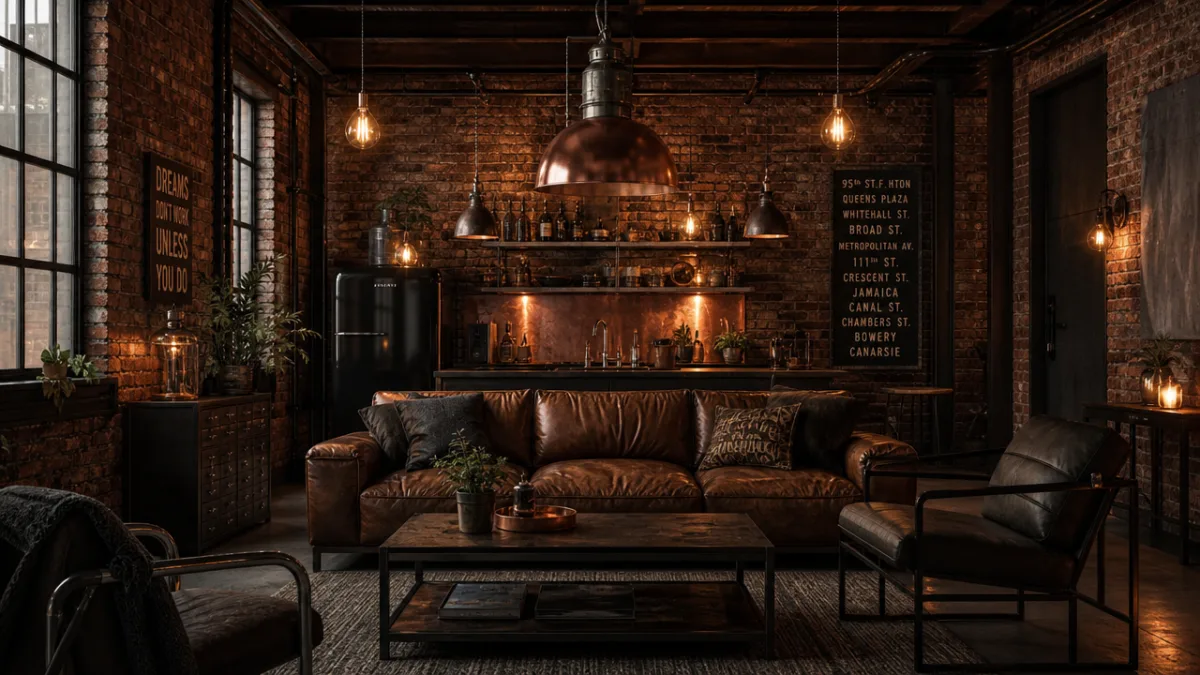
Understanding the Steampunk Aesthetic and Where This Fan Fits
Steampunk is one of those design aesthetics that’s a little hard to explain until you see it, and then it’s immediately obvious. It’s rooted in Victorian science fiction — the imagined worlds of Jules Verne and H.G. Wells — and it asks: what if steam power and clockwork mechanisms had driven the future instead of electricity and digital technology? The visual result is extraordinary: exposed gears and pipes, leather, brass and copper metals, goggles, airships, and the constant impression that every single object has been engineered with obsessive precision and a healthy love of drama.
A vintage copper wall fan slots into that world almost perfectly. The rotating blades call to mind propellers on some fantastical flying machine. The aged copper finish looks like it’s survived decades in a Victorian workshop. The wall-mounted form suggests purpose and industry. In a steampunk-themed space, a piece like this doesn’t just decorate the room — it completes it. Place it above a gear-covered bookshelf or next to a pipe-framed mirror and it says everything the room is trying to say, with real economy and style.
What’s great about steampunk design, though, is that you don’t have to go all in. You don’t need to turn your entire home into a Victorian airship to enjoy what this aesthetic offers. One well-chosen piece — a copper wall fan, say — can introduce steampunk energy into an otherwise conventional room and create exactly the kind of intriguing tension that keeps a space from feeling predictable. That ability to add dimension without overwhelming is what separates a genuinely great accent piece from a novelty, and this fan delivers it in spades.
How to Style and Place a Vintage Copper Wall Fan in Your Home
Placement comes down to understanding how visually “heavy” the piece is and what your wall can support around it. The vintage copper wall fan looks best at or just above eye level, on a wall that gets some natural light during the day. Copper responds beautifully to light — morning sun brings out the gold tones, and evening lamplight deepens it to a rich amber that feels almost cinematic. If you can position it where light actually hits it, you’ll be amazed at how much the piece comes alive at different times of day.
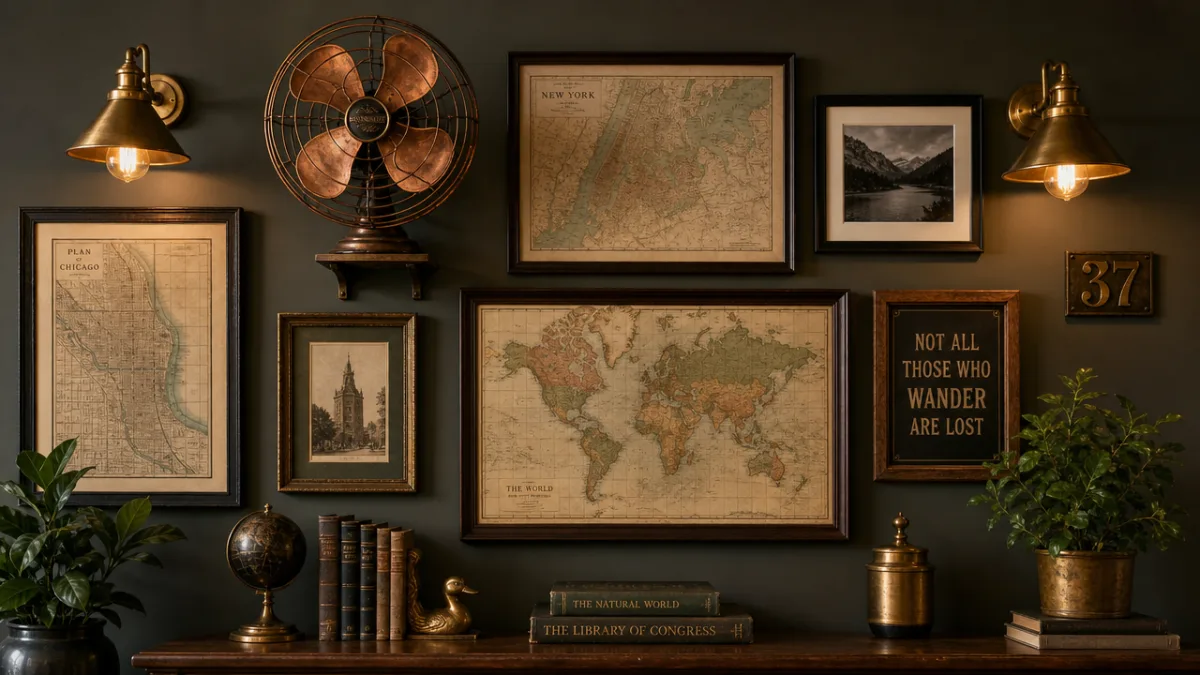
If you’re building a gallery wall, use the fan as your anchor — the piece everything else arranges itself around. Framed vintage maps, black-and-white maritime photographs, shadow boxes with antique compasses or small ship models, and industrial-style sconces all work beautifully alongside it. The fan’s circular shape provides a natural contrast to the rectangular frames that typically dominate gallery walls, and its three-dimensional quality adds a tactile presence that flat art simply can’t. When you’re arranging everything, aim for visual balance rather than perfect symmetry. A little asymmetry tends to feel more dynamic and alive.
Beyond the living room, this fan has a lot of range. In a bathroom with subway tile and exposed pipes, it reinforces an industrial look while nodding to the ventilation fans of old hotels and steamships. In a home bar or entertainment room, it helps build that genuinely atmospheric, tavern-like feeling that’s so hard to manufacture. In a home office or creative studio, it communicates that the person who works there cares about craft and history. Here’s a quick rundown of rooms where it really shines:
- Living rooms and dens: Where it serves as a conversation piece and aesthetic anchor for industrial or nautical themes.
- Home bars and entertainment rooms: Where its vintage character reinforces a pub or speakeasy atmosphere.
- Bathrooms with industrial or maritime themes: Where copper accents complement subway tile and exposed fixture finishes.
- Creative studios and home offices: Where it adds personality and signals a love of craftsmanship and history.
- Bedrooms with steampunk or eclectic decor: Where it functions as a distinctive headboard accent or feature wall element.
- Commercial spaces such as restaurants and boutique hotels: Where it contributes to a carefully crafted brand atmosphere.
Caring for Copper Decor: Maintenance and Longevity
One of the genuinely enjoyable things about owning copper decorative pieces is watching them change. Copper is a reactive material — it responds to humidity, air quality, even the oils from your hands — and those reactions produce the patina that gives older copper its distinctive character. That said, not everyone wants their copper to age freely. Some people love the brighter, warmer look of fresher copper and want to maintain it. Others are perfectly happy letting things develop however they will. Knowing how to care for your fan means you can steer toward whichever outcome appeals to you.
If you want to preserve the existing finish — whether that’s a bright shine or an applied artificial patina — the most important thing is keeping the piece clean and dry. Dust it regularly with a soft, dry cloth, and make sure you get into the spaces between the blades and around any housing. Avoid water or liquid cleaners unless the piece has a lacquer coating, since moisture can push the patination in directions that are hard to predict or reverse. If it came lacquered, a gentle wipe with a slightly damp cloth followed by immediate drying is usually fine.
If you’re curious about what natural aging actually looks like over time, here’s roughly what to expect:
- Initial brightening: New copper often has a bright, warm orange-red tone that may deepen to a richer brown within the first few months, especially in humid environments.
- Brown patina development: Over time, copper typically develops a warm brown patina that many collectors find more appealing than the original bright finish.
- Verdigris formation: In high-humidity environments, green or blue-green verdigris may begin to appear, particularly in corners and crevices. This is a natural and often desirable characteristic of aged copper.
- Polishing options: If you wish to reverse aging at any stage, commercial copper polishes or a homemade paste of salt and white vinegar can restore brightness to most uncoated copper surfaces.
Practical longevity also comes down to how you mount the piece. Make sure it’s going into a stud or that you’re using wall anchors rated for its weight. Decorative fans tend to be fairly light, but secure mounting protects both the piece and your wall over the long term. It’s worth checking periodically that the hardware is still snug, especially if the fan is in a spot where it might occasionally get bumped.
The Investment Value of Decorative Vintage Accents
In a world of fast furniture and decor that’s designed to be replaced next season, there’s real wisdom in choosing pieces that have staying power. The vintage copper wall fan belongs to a category of objects that holds up across design cycles — not because it chases trends, but because it doesn’t. Pieces rooted in recognizable historical aesthetics like industrial, nautical, and steampunk tend to remain desirable over time because they connect to something deeper than whatever’s popular right now. They’re about craftsmanship, about historical periods of genuine ingenuity, about the enduring appeal of beautiful things that were also built to be useful.
From a practical standpoint, well-chosen accent pieces can genuinely affect how a home is perceived and valued. Real estate agents and stagers will tell you that thoughtfully styled spaces photograph better, show better, and attract stronger offers. A vintage copper wall fan in a dining room or living room signals to buyers or renters that this space was put together with intention and knowledge — and that reads as value. It’s particularly effective in markets where industrial, nautical, and steampunk aesthetics already have a strong following.
But honestly, the more immediate return on investment is simpler than all that. Research in environmental psychology consistently finds that people feel better — more creative, more relaxed, more at ease — in spaces they find genuinely beautiful and personally meaningful. Surrounding yourself with objects that reflect your taste and tell stories you care about isn’t an indulgence; it’s a real quality-of-life choice. The vintage copper wall fan, with its rich material history and its ability to turn a blank wall into something worth looking at, delivers on that front every single day.
Where to Use Vintage Copper Wall Fans in Commercial and Hospitality Settings
The appeal of this fan goes well beyond residential spaces. In commercial and hospitality settings, where the atmosphere you create is often the difference between a place people return to and one they forget, decorative pieces like this one carry real weight. Restaurants with an industrial or maritime identity — gastropubs, seafood spots, breweries, cocktail bars — find that copper wall fans contribute enormously to the overall feel, lending a sense of authenticity that guests respond to emotionally even if they can’t quite articulate why.
Boutique hotels have been especially quick to embrace industrial and steampunk aesthetics as a way to stand apart from the cookie-cutter sameness of large chain properties. A hotel room or corridor that features vintage copper wall fans alongside Edison bulb fixtures, pipe-framed headboards, and aged leather furniture is making a clear statement: this place was designed with care, and for a specific kind of guest. That guest — the one who values atmosphere and experience over brand loyalty — is often exactly the customer these properties most want to attract.
Creative commercial spaces have picked up on this too. Co-working studios, independent bookshops, record stores, and artisanal food markets have figured out that their physical environment is an extension of who they are, and that customers form real emotional attachments to spaces as much as to what those spaces sell. When the interior feels genuinely considered and materially interesting — when it has history and character — people want to stay longer and come back more often. In that context, the 14-inch vintage copper wall fan isn’t just decoration. It’s doing actual work for the business, contributing to the kind of atmosphere that turns casual visitors into regulars.








What do you think?
It is nice to know your opinion. Leave a comment.